

Disposal of Vehicle: A Complete Guide to Safe, Legal and Eco-Friendly Practices
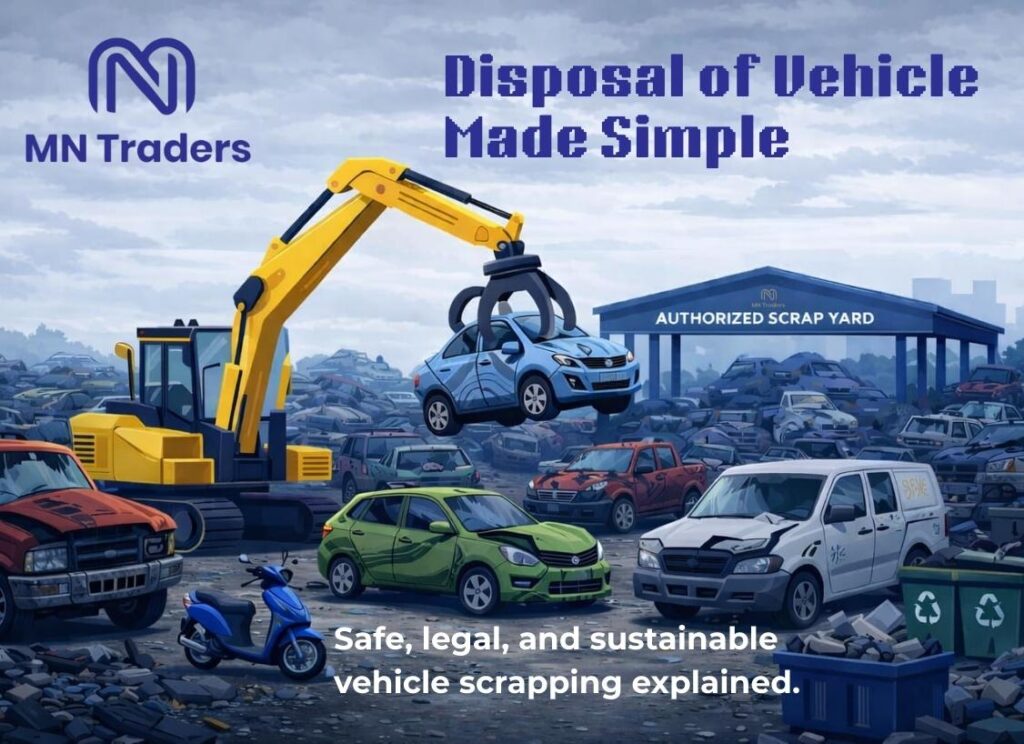
Disposal of Vehicle: A Complete Guide to Safe,Legal and Eco-Friendly Practices
The disposal of vehicle is an important responsibility that many vehicle owners need to know.When a car, bike or a commercial vehicle reaches the end of its life. Abandoning it or selling it is illegal and can cause serious environmental and legal problems. Proper dismantle of vehicle needs us to follow the government regulations, it protects the environment and allows usable materials to be recycled. In today’s world where sustainability and legal accountability matter more than anything it is important for owners to understand the correct process for it.
What Is Disposal of Vehicle?
The process refers to the legal process of deregistering and scrapping a vehicle. The vehicles which are no longer in a condition to run on roads or economically reliable to repair. This process includes disassembling, recycling usable components and safely discarding dangerous materials such as oil, battery and fluids.Improper disposal can lead to pollution, misuse of vehicle documents and penalties for the registered owner. That is why governments across regions have introduced structured vehicle scrapping and disposal policies.
Why Proper Disposal Is Important?
Proper disposal is not just a legal formality it serves multiple critical purposes
- Environment issue – Old vehicles release harmful gases like carbon monoxide and leaks toxic fluids. This is dangerous for soil and water. Correct disposal can reduce these issues and promote recycling.
- The Legal authority – If a vehicle is not officially disposed the registered owner remains responsible. Proper disposal prevents fines, liabilities and misuse of registration details.
- Resource recycling – Many components such as steel, aluminum, rubber and plastic can be reused. Disposal of vehicle helps conserve natural resources through recycling.
- Road safety – Timely disposal of those vehicles removes unfit vehicles from roads and improves overall safety.
When is it necessary to consider disposal of vehicles?
You should consider the disposal when:
- The vehicle has reached the end of its time period
- Repair costs are higher than the vehicle’s value
- The vehicle fails emission or fitness tests repeatedly
- It has been severely damaged in an accident
- The vehicle is unused for a long period
- The delay in disposal can increase maintenance costs and legal risks.
The process of disposal of vehicle
Step 1: Choose an authorized scrapping facility
Always select a government approved and authorized vehicle scrapping center. This ensures legal and safety issues.
Step 2: Document Verification
You will need documents such as:
- Registration Certificate (RC)
- ID proof of the owner
- Insurance of the vehicle
- Proper documentation is crucial for official disposal.
Step 3: Deregistration
The vehicle is deregistered from the transport authority records. This step confirms the legal disposal of vehicle and makes the owner free from future liabilities.
Step 4: The process of scrapping and recycling
The vehicle will be breaken apart.The good parts will be recycled and the dangerous materials are safely disposed.
Step 5: The certificate of destruction
Once completed you will receive a certificate of destruction which is proof for the legal disposal of vehicle.
Benefits of Authorized Disposal
Choosing authorized disposal of vehicles offers several advantages:
- Transparency in process
- Legal protection for the owner
- Environmentally safe recycling
- Possible financial incentives or scrap value
- Peace of mind
- Unauthorized disposal of vehicle may seem cheaper but can lead to serious long-term consequences.
Common Mistakes to Avoid During Disposal of Vehicle
Many owners unknowingly make errors during disposal of vehicles.
- Avoid these common mistakes
- Selling the vehicle to unlicensed scrap dealers
- Skipping deregistration
- Not collecting a Certificate of Destruction
- Ignoring pending fines or dues
- Handing over incomplete documents
- Correct disposal of vehicle requires attention to detail to avoid future legal issues.
Role of Disposal of Vehicle in Sustainability
The disposal of vehicle plays a major role in building a circular economy. The metals from scrapped vehicles reduce the need for mining. Recycled rubber and plastic make less waste and safe disposal of fluids protects ecosystems.
By following proper disposal practices, individuals actively contribute to environmental sustainability and responsible consumption.
Future of Disposal of Vehicles
With stricter emission norms and vehicle fitness policies, the importance of disposal of vehicle is growing. Governments are encouraging owners to scrap old vehicles and replace them with safer fuel efficient and electric alternatives. In the future disposal will become more streamlined, digitized and incentive-driven which makes it easier for owners to comply and benefit.
Conclusion
The disposal of vehicle has become an important step that every owners of vehicles must take care necessarily. It ensures legal compliance, protects the environment and supports sustainable resource management. By choosing authorized centres and following the correct process the disposal of vehicle becomes a responsible and rewarding decision. If your vehicle has reached the end of its journey, properly dispose the vehicle and contribute to a cleaner safer future.
Leave a Reply